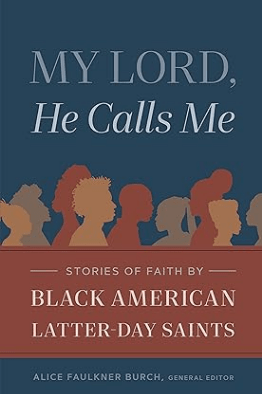
The full title of the book I’m reviewing is My Lord, He Calls Me: Stories of Faith by Black American Latter-day Saints, a collection edited by Alice Faulkner Burch. This is a collection of firsthand accounts, meaning that my expository nonfiction review rubric isn’t quite appropriate and neither is my creative nonfiction one, seeing as I am judging a bunch of accounts by laypeople and judging their writing style just feels mean. In any case, I recommend this book.
If you’re wondering why I’m talking about such a faith-promoting book on a site dedicated to collecting resources for ex-Mormons, then don’t worry—I’m about to tell you!
Why Ex-Mormons Might Want to Read This
My Lord, He Calls Me can indeed be a tough read if you’re deconstructing. Reading stories of faith when the writers are talking about enduring struggles caused by the racism of the Church they belong to, a Church you no longer believe is God’s organization, will make you sad and probably angry.
There are accounts from teenagers in the book, and I wonder how they might feel about being in this book when they get older.
Another example: One writer says that they believe that Heavenly Father allowed her to accept the missionaries’ answer to her questions about why there were no Black men in leadership because if she had known then what she knows now, she would have never joined the Church.
Oof.
On a more historical note, this book also contains firsthand accounts of Black members throughout the Church’s history. That means a phenomenal collection of writings from early Church history and from during the priesthood and temple restrictions on Black members. There’s a personal history by Jane Manning James as well as a man who was part of a group of Black men that worked with apostles, trying to get them to broaden their perspectives and opinions. These are essential perspectives from Church history that anyone interested in understanding Mormonism needs.
Further, non-Black ex-Mormons need to understand more about what it’s like to be a faithful Black Mormon if we’re going to better understand and support Black ex-Mormons. It’s also important to support Black Mormons where they are, whether they believe or not, so as to not make them pawns in your angst against the Church. Obviously I also recommend reading and listening to Black ex-Mormon accounts of what being in the Church was like, but engaging with faithful members’ stories can help you focus on supporting the people rather than using their accounts to support your own worldview.
So maybe don’t read this book right after you stop believing, but do make reading historical accounts by Black members a priority if you’re interested in Church history, and make reading or listening to accounts of contemporary members a priority at some point in your faith transition process.
How This Book Expanded My Perspective
The accounts in this book deal fairly frankly with racism from members. It does not go hard on systemic racism in the same way that Mormonism in White Supremacy does because that’s not what this book is about. Here are a few of my takeaways.
First, many Black members who grew up in the Church came into the Church via adoption into white families, so the Black Mormon experience often intersects with trans-racial adoption. (The editor, Alice Faulkner Burch, has worked a lot with white parents to help them make their parenting more culturally competent.)
Second, while I had assumed that most Black Mormons who join the Church and stay in the Church do so despite the issues re: race (and that’s true), many of the writers also indicate that they joined the Church in part because of their relationship with race. How people relate to race and identity is complicated.
The account of Jane Manning James was particularly moving in this regard. She describes how, when journeying to Nauvoo, she and her group were arrested and asked to present papers proving they weren’t runaway slaves. And then they had to walk to Nauvoo because they weren’t allowed on more efficient, comfortable transportation due to their race. And then they got to Nauvoo, where Joseph Smith gave her a home, a warm welcome, and a promise that she was among friends now and would be protected.
I am far from a fan of Joseph Smith, but I get why those experiences would influence her to join the Church in part because of how racism affected her. Context is important, and sometimes, Mormonism has offered more racial justice than the rest of the world.
Third, there’s an essay that talks about how Ethiopia was a Christian nation before Spain, England, or Portugal, and how the first Angolans who were held captive and enslaved in Virginia were Christian. That’s not to say that Christianity has not also been a tool of white supremacy, but knowing that history is particularly important for Black Christians who understandably don’t want to view their religion and salvation as contingent on Black chattel slavery.
The book also includes poetry, and that was both good to read and a nice way to break up sections of the book.
So overall, I appreciated the opportunity to read this book. It’s well-organized and edited and has accounts of historical significance.
Discover more from Eternity of Cats
Subscribe to get the latest posts sent to your email.
 Eternity of Cats