After you stop believing or decide to stop affiliating with the Church, you will probably feel fear. Here’s an overview of what fear is, when it’s useful, and how you might start to confront and manage Church-derived and existential fears.
Category Archives: Mental Health Basics
First Things: 5 Tips for Setting Boundaries

What is a boundary? A boundary is a limit or a rule that you set for your life to keep yourself healthy and happy.
Here are the Eternity of Cats rules for setting boundaries.
Ex-Mormon Anger, Part 3: Deconstructing Teachings on “Contention”
Today, we’ll talk about how LDS teachings about contention can prevent people from developing conflict-resolution skills and ultimately hurt relationships.
Ex-Mormon Anger, Part 2: LDS Teachings on Anger

In Part 1, we talked about what anger is and why it is important. In Part 2, we’re going to deconstruct some LDS teachings on anger. (We’ll deal with teachings on “contention” specifically in Part 3.)
For orthodox members, anger can be overwhelming, disturbing, incomprehensible, and possibly Satanic. So amid your faith transition, your anger may make you feel out of control.
I hope this will help. After you read this, you may want to go back to Part 1 and review what healthy anger is.
Ex-Mormon Anger, Part 1: All About Anger

Anger is probably the dominant emotion for most ex-Mormons during their faith transition. You probably feel betrayed upon learning things the Church hid, enraged about the harm the Church has done and is doing, and furious about the lies Church leaders have told.
But you also may feel like anger is bad and have no idea how to handle it. So let’s talk anger: what psychology says about it and some basic tips for managing anger.
First Things: Faith-Transition Grief for Ex-Mormons
I hope that with time, you come to view the death of your existing faith as a spiritual rebirth. But, whatever you call it, the transition is hard. But things can get easier. One way to ease the transition is to know the basics about grief and the emotions that go with it.
First Things: Where Does Morality Come From?
When you stop believing in the LDS gospel, you (or more likely, your TBM family members) may wonder how you’re going to be moral without the guidance of the Church. Here’s the scientific explanation.
Book Review: The Righteous Mind, by Jonathan Haidt
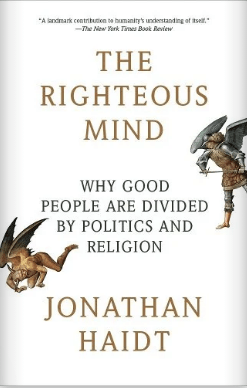
Perhaps my favorite post-Mormon read so far has been The Righteous Mind: Why Good People Are Divided by Politics and Religion, by Jonathan Haidt. I love this book because it presents the best theories I’m aware of for how morality and belief work. Both of these explanations can be extremely helpful to ex-Mormons who areContinue reading “Book Review: The Righteous Mind, by Jonathan Haidt”
 Eternity of Cats